The Problem of Suffering and Evil
Narcissus and GoldmundThe Problem of Suffering and Evil is the conflict between Goldmund’s direct experience of human cruelty and death and the theological explanations offered by Narcissus. The novel makes the problem concrete in deserted homes, plague victims, and the persecution of Jews; it then gives it a personal and philosophical form in the friends’ argument about creation, moral responsibility, and whether any account of divine order can answer what Goldmund has witnessed.
The Problem in the Plague-Stricken World
The question first takes shape not as abstract theology but as a landscape of loss. Goldmund and Robert approach a village where armed peasants drive strangers away. The following morning, at an isolated farm, Goldmund enters a silent house and discovers that the household has died. Robert recognizes the danger as plague and, terrified that Goldmund may be infected, tries to leave him. Goldmund holds him back: if either of them falls ill, he insists, they should not be left alone to die. Even before the epidemic’s wider social consequences become clear, the scene sets fear against a practical form of care.
As the two travel on, the plague has emptied farms and disrupted ordinary life. Some communities bar outsiders; elsewhere the travelers pass through settlements without hindrance. They find unburied dead, abandoned livestock, and houses without anyone to tend them. They take food and drink from deserted places and care for some animals, but the abundance does not make their circumstances seem fortunate. Robert remains preoccupied with catching the disease, while Goldmund watches the devastation with a mix of fascination and sorrow. Their different responses establish that the crisis is at once a material danger and a test of how people meet the suffering around them.
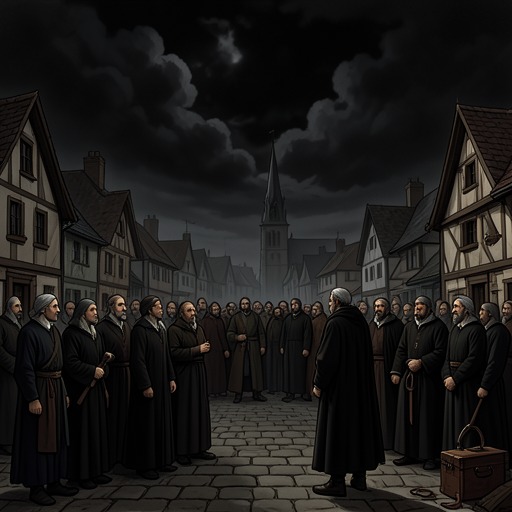
The disaster also produces a social order of suspicion. People abandon sick relatives, loot empty houses, and leave some dead unburied; in other places, fear gives way to desperate feasting and revelry. Communities search for culprits, accusing the poor, the rich, foreigners, doctors, and Jews of causing the disease. In one town Goldmund sees the ghetto burned, with a crowd preventing people from escaping. The epidemic does not merely expose mortality: it turns fear into a rationale for violence against innocent people.
Rebekka and the Limits of Help
Goldmund encounters Rebekka after her father and fourteen other Jews have been burned to death on the town authorities’ orders. She has escaped, then returned to mourn, blaming herself for having survived. Goldmund helps her gather her father’s bones from the ashes and bury them in a hiding place in a field. This act offers a specific, limited response to suffering: he cannot undo the killing, but he can help the daughter perform a burial for her father.
The encounter also reveals a limit in Goldmund’s understanding of what help requires. The next morning, he urges Rebekka to travel with him, presenting protection and companionship alongside his attraction to her. She rejects the offer, accusing Christians of first helping a daughter bury the father their people killed and then expecting the daughter to go with them. Her anger makes the disparity between Goldmund’s intention and the situation’s moral weight impossible for him to ignore. He acknowledges that she may be right and asks her forgiveness. His recognition does not repair the violence or ease her grief; it marks his effort to hear the person suffering rather than turn her loss into a general lesson or an occasion for his own desires.
Rebekka’s story later returns in Goldmund’s conversation with Narcissus. Goldmund recounts it passionately and asks whether the world they inhabit is hellish and revolting. The question is sharpened by his own failure to stop the burning: Narcissus points out that Goldmund witnessed the violence but did not prevent it. This does not make the victim’s suffering less real, but it complicates the distinction between condemning cruelty and being able to overcome it. The episode keeps responsibility in view without suggesting that one traveler could have undone the persecution.
Goldmund’s Indictment and Narcissus’s Reply
Goldmund’s accusation draws its force from the scale and variety of what he has seen: streets and houses crowded with corpses, abandoned children, looting, mass burials, and the killing of Jews. He remembers both the victims and the social breakdown around them. When Narcissus asks whether he has found peace, Goldmund rejects the idea that he has made peace with God. He says instead that he has made peace with the pain in his chest, distinguishing his acceptance of physical suffering from any reconciliation with a world he considers badly made.
Narcissus does not answer by claiming that life on earth is harmonious or that human beings are good. He separates belief in the perfection of the Creator from approval of creation, and says that Christian teaching itself recognizes evil in human conduct. As an abbot, he argues, he deals with imperfect, sinful lives by measuring them against justice and trying to correct wrongdoing. His answer identifies moral ideals as standards for action, not proof that the world already conforms to them. It offers a way to oppose evil within an imperfect order, but does not make Goldmund’s examples disappear.
Goldmund presses the gap between principle and experience. Justice, he suggests, can remain secure in books and thought while the world continues to contain injustice. Narcissus calls this anger feeling rather than thought, and reminds Goldmund that he has also experienced delight: riding through a beautiful landscape or pursuing love can make the world appear otherwise. Goldmund accepts the contrast but refuses the inference that pleasure cancels horror. He seeks moments of happiness amid death, he says, without mistaking temporary consolation for evidence that suffering is unreal.
Moral Responsibility and the Unresolved Question
The argument turns partly on what people can do when confronted with violence. Narcissus says he would not order the killing of Jews, but might have to witness and tolerate it if he lacked the power to prevent it. He then asks Goldmund whether he prevented the burning he saw. The exchange exposes a painful distinction between ordering an atrocity, consenting to it, and failing to stop it. It does not settle how responsibility should be judged when power is limited; instead, it makes the difference between moral refusal and effective intervention central to the discussion.
Goldmund’s concern is not confined to one debate. He has been drawn through the plague country by curiosity as well as grief, and death appears to him not only as a force to fear but as part of the transience of life. In an earlier encounter with a painted Dance of Death, he finds the image’s stern depiction of inevitable mortality incomplete: his own experience includes death’s association with tenderness and the maternal. That perception gives suffering an intimate, emotionally charged meaning, but it does not resolve the ethical scandal of people abandoning the sick or burning their neighbors.
The novel consequently holds together two kinds of response without allowing either to cancel the other. Narcissus’s appeal to justice gives a basis for resisting evil even when the world is not just; Goldmund’s anger insists that such principles must be tested against the lives and deaths they are meant to address. The friends’ affection allows the disagreement to be spoken openly, but their conversation yields no consoling explanation for the plague or the persecution. The problem remains: suffering calls for judgment and care, while the scale of evil makes any claim of harmony feel inadequate.